
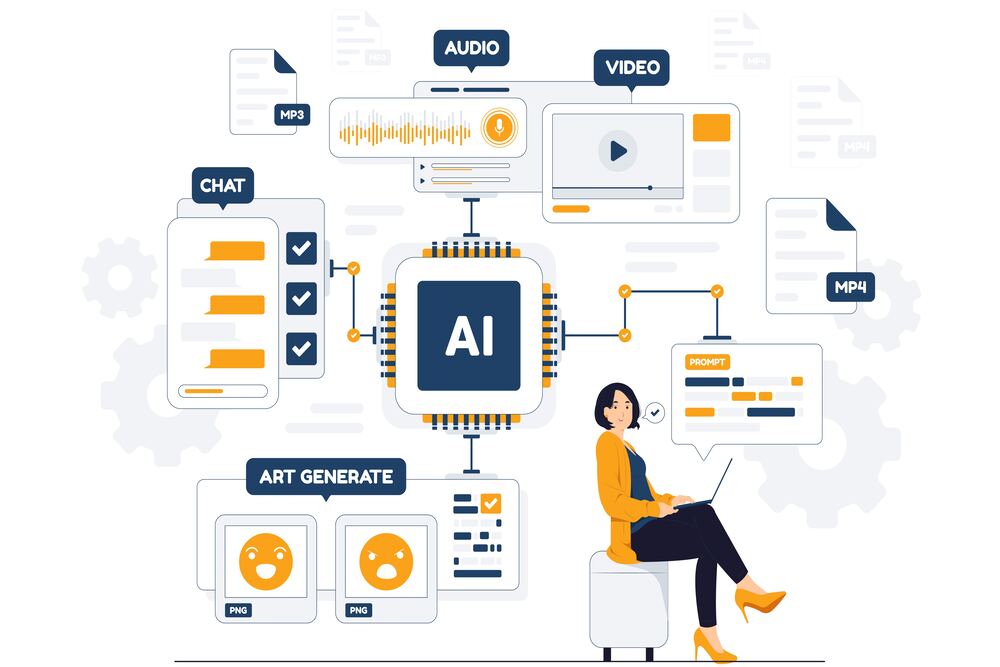


Discover how AWS enables businesses to build intelligent systems using cloud-based AI services like SageMaker, Rekognition, and Bedrock. Learn tools, benefits, and real-world use cases.
Artificial intelligence is no longer limited to large technology companies with massive computing resources. Today, businesses of all sizes can use AI to automate operations, analyze data, and create intelligent digital products. One of the main reasons for this accessibility is the rise of cloud computing platforms that provide ready-to-use AI tools and scalable infrastructure.
Among these platforms, Amazon Web Services has emerged as a leader in enabling organizations to build AI-powered solutions without the complexity of managing hardware or building machine learning systems from scratch. By combining cloud infrastructure with advanced artificial intelligence services, AWS helps companies develop smarter applications that improve efficiency, decision-making, and customer experiences.
In this guide, we’ll explore how AI in the cloud works, the key AI services offered by AWS, and how businesses can leverage them to build intelligent systems.
Understanding AI in the Cloud
AI in the cloud refers to the use of cloud-based infrastructure and services to develop, train, and deploy artificial intelligence models. Instead of relying on local servers or expensive computing hardware, organizations can access powerful machine learning capabilities through cloud platforms.
This approach offers several advantages:
- Scalable computing power for training complex models
- Access to pre-built AI tools and APIs
- Lower upfront costs compared to traditional infrastructure
- Faster development cycles for AI-powered applications
Cloud platforms provide everything required for AI development, including data storage, processing capabilities, machine learning frameworks, and deployment environments.
With AWS, businesses can integrate AI into their existing systems while maintaining flexibility and scalability.
Why Businesses Are Moving AI to the Cloud
Companies across industries are increasingly adopting cloud-based AI because it removes many of the barriers traditionally associated with artificial intelligence.
Reduced Infrastructure Costs
Training machine learning models requires powerful GPUs and large-scale computing environments. Purchasing and maintaining this hardware can be extremely expensive.
Cloud platforms eliminate these costs by allowing companies to pay only for the resources they use.
Faster Innovation
AI projects often require experimentation and iteration. Cloud environments make it easier to test different models, adjust datasets, and deploy improvements quickly.
Scalability
When an AI application grows, cloud infrastructure can automatically scale to handle increased demand. This ensures consistent performance even during high workloads.
Integration With Modern Applications
Cloud AI tools can easily integrate with APIs, mobile applications, web platforms, and enterprise systems, making them suitable for a wide range of use cases.
Key AI Services Offered by AWS
AWS offers a wide ecosystem of AI and machine learning services designed for developers, data scientists, and businesses.
Below are some of the most widely used tools.
Amazon SageMaker: Building and Deploying Machine Learning Models
One of the most powerful machine learning platforms offered by AWS is Amazon SageMaker.
SageMaker provides an end-to-end environment where developers can build, train, and deploy machine learning models at scale.
Key capabilities include:
- Model training using large datasets
- Automated machine learning (AutoML)
- Model deployment and hosting
- Performance monitoring and optimization
For example, a retail company can use SageMaker to build models that predict customer purchasing behavior. These insights can help businesses improve product recommendations and personalize marketing campaigns.
Amazon Rekognition: AI for Image and Video Analysis
Another widely used service is Amazon Rekognition, which allows applications to analyze images and videos using artificial intelligence.
Rekognition can identify:
- Faces and emotions
- Objects and scenes
- Text within images
- Unsafe or inappropriate content
This technology is used in industries such as media, security, and retail. For example, security systems can automatically identify suspicious activities using video analysis powered by Rekognition.
Amazon Comprehend: Natural Language Processing
Understanding human language is a key component of many AI applications. AWS offers a natural language processing service called Amazon Comprehend that can analyze large volumes of text.
It can detect:
- Sentiment in customer feedback
- Key phrases and entities
- Language identification
- Topics within documents
Businesses use this technology to analyze reviews, social media comments, and customer support messages to better understand customer needs.
Amazon Lex: Building Intelligent Chatbots
Conversational AI is becoming an essential part of customer support and digital experiences. AWS provides Amazon Lex to help developers build chatbots and voice assistants.
Lex uses the same conversational AI technology behind Amazon Alexa.
With Lex, businesses can create automated assistants capable of handling tasks such as:
- Customer service inquiries
- appointment scheduling
- product recommendations
- booking and reservations
This reduces operational costs while improving response times for customers.
Amazon Bedrock: Generative AI for Modern Applications
Generative AI is transforming how businesses create content, automate workflows, and build intelligent systems.
AWS recently introduced Amazon Bedrock, a platform that allows developers to build applications using large language models without managing complex infrastructure.
Bedrock enables companies to create:
- AI assistants
- automated content generation tools
- conversational interfaces
- intelligent search systems
Generative AI tools like Bedrock are helping organizations innovate faster while simplifying AI development.
Real-World Applications of AWS AI
Organizations across industries are using AWS AI services to create smarter systems and improve operations.
E-Commerce Personalization
Online retailers use AI to analyze customer behavior and recommend products. Machine learning models can predict which products customers are most likely to purchase, increasing sales and customer engagement.
Healthcare Diagnostics
AI models trained on medical data can help doctors detect diseases earlier. Cloud-based AI allows healthcare organizations to analyze large datasets quickly while maintaining compliance and security.
Fraud Detection in Finance
Financial institutions use AI to monitor transactions and detect suspicious patterns. These systems can identify potential fraud in real time, helping protect customers and financial institutions.
Smart Customer Support
Chatbots powered by natural language processing can answer common customer questions instantly. This reduces the workload on human support teams and improves customer satisfaction.
Predictive Maintenance in Manufacturing
Manufacturing companies use AI to monitor equipment performance and predict failures before they occur. This helps reduce downtime and optimize maintenance schedules.
How Businesses Can Implement AI Using AWS
Building AI systems may seem complex, but cloud platforms simplify the process.
A typical AI workflow on AWS involves several steps.
1. Data Collection and Storage
Data is the foundation of any AI system. Businesses often store their data using Amazon S3, a scalable cloud storage service designed for large datasets.
2. Data Preparation
Raw data must be cleaned and organized before training machine learning models. This step ensures that the AI system can learn effectively from the available information.
3. Model Training
Developers use machine learning frameworks and tools such as SageMaker to train AI models using prepared datasets.
4. Model Deployment
Once the model is trained, it can be deployed as an API or integrated into applications. This allows software systems to generate predictions or automate tasks.
5. Monitoring and Optimization
AI models must be monitored to ensure accuracy and performance. Continuous improvements help maintain reliable results as data changes over time.
Benefits of Building AI Systems on AWS
AWS provides several advantages for organizations developing AI-powered applications.
Flexibility
Developers can choose from a wide range of machine learning frameworks and tools depending on their project requirements.
Security and Compliance
AWS offers strong security features and compliance standards, making it suitable for industries such as healthcare, finance, and government.
Global Infrastructure
AWS operates data centers around the world, allowing businesses to deploy AI applications closer to their users for improved performance.
Continuous Innovation
AWS regularly introduces new AI services and updates, helping organizations stay ahead of technological advancements.
The Future of AI in the Cloud
The combination of artificial intelligence and cloud computing is expected to drive the next wave of digital transformation.
Several trends are shaping the future of AI in the cloud:
- Generative AI platforms that automate content creation and decision-making
- Edge AI that processes data closer to devices and sensors
- Autonomous business processes powered by machine learning
- AI-powered analytics that deliver deeper insights from large datasets
As these technologies continue to evolve, cloud platforms like AWS will play a critical role in enabling organizations to build smarter and more adaptive systems.
Conclusion
Artificial intelligence is becoming an essential part of modern digital infrastructure. However, building AI systems traditionally required specialized expertise and expensive hardware.
Cloud platforms have changed that landscape.
By offering scalable infrastructure, ready-to-use machine learning tools, and advanced generative AI capabilities, Amazon Web Services allows businesses to develop intelligent applications more efficiently than ever before.
From predictive analytics and automation to conversational AI and image recognition, AWS provides the tools needed to turn data into actionable insights and build smarter systems.
As organizations continue to embrace digital transformation, the integration of AI and cloud computing will remain a powerful driver of innovation and business growth.
Recent Posts
Ready to innovate and transform your business? Say hello to CodeBeavers!
If you are looking for ways to bring your product or app ideas to life? We’ve got your back. CodeBeavers has the tools and engineers you need to make your projects come alive. With CodeBeavers, you’ll be able to build faster than ever, deploy code with ease, and scale like never before. Send us your requirements now, and let’s start winning together.